
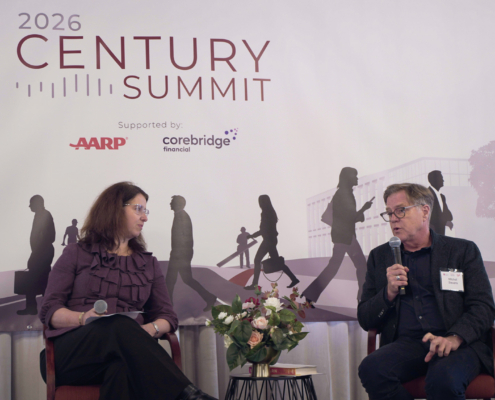
 https://learningsociety.io/wp-content/uploads/2026/04/Stevens-CenturySummit.jpg
1152
2048
Allison Wiley
https://learningsociety.io/wp-content/uploads/2025/11/Learning-Society-Stacked-Full-Color-300x85.png
Allison Wiley2026-04-30 07:00:002026-04-27 19:37:48A new model for learning and work, incubated at Stanford
https://learningsociety.io/wp-content/uploads/2026/04/Stevens-CenturySummit.jpg
1152
2048
Allison Wiley
https://learningsociety.io/wp-content/uploads/2025/11/Learning-Society-Stacked-Full-Color-300x85.png
Allison Wiley2026-04-30 07:00:002026-04-27 19:37:48A new model for learning and work, incubated at Stanford https://learningsociety.io/wp-content/uploads/2026/04/jon-tyson-PXB7yEM5LVs-unsplash-scaled-e1778106825241.jpg
1780
1920
Allison Wiley
https://learningsociety.io/wp-content/uploads/2025/11/Learning-Society-Stacked-Full-Color-300x85.png
Allison Wiley2026-04-28 21:11:362026-07-24 15:42:27Catalyzing Early-Career Potential in the AI Era: Convening Summary
https://learningsociety.io/wp-content/uploads/2026/04/jon-tyson-PXB7yEM5LVs-unsplash-scaled-e1778106825241.jpg
1780
1920
Allison Wiley
https://learningsociety.io/wp-content/uploads/2025/11/Learning-Society-Stacked-Full-Color-300x85.png
Allison Wiley2026-04-28 21:11:362026-07-24 15:42:27Catalyzing Early-Career Potential in the AI Era: Convening Summary https://learningsociety.io/wp-content/uploads/2026/04/original.avif
1098
1952
Allison Wiley
https://learningsociety.io/wp-content/uploads/2025/11/Learning-Society-Stacked-Full-Color-300x85.png
Allison Wiley2026-04-27 19:31:362026-04-27 19:37:44Young People Are Falling Behind, but Not Because of AI
https://learningsociety.io/wp-content/uploads/2026/04/original.avif
1098
1952
Allison Wiley
https://learningsociety.io/wp-content/uploads/2025/11/Learning-Society-Stacked-Full-Color-300x85.png
Allison Wiley2026-04-27 19:31:362026-04-27 19:37:44Young People Are Falling Behind, but Not Because of AI https://learningsociety.io/wp-content/uploads/2026/04/29college-grads-illo-sub-superJumbo.webp
2048
1651
Allison Wiley
https://learningsociety.io/wp-content/uploads/2025/11/Learning-Society-Stacked-Full-Color-300x85.png
Allison Wiley2026-04-27 19:28:172026-04-27 19:37:40Why College Graduates Feel Betrayed
https://learningsociety.io/wp-content/uploads/2026/04/29college-grads-illo-sub-superJumbo.webp
2048
1651
Allison Wiley
https://learningsociety.io/wp-content/uploads/2025/11/Learning-Society-Stacked-Full-Color-300x85.png
Allison Wiley2026-04-27 19:28:172026-04-27 19:37:40Why College Graduates Feel Betrayed https://learningsociety.io/wp-content/uploads/2026/03/Scaling-Work-Based-Learning-A-Framework-for-Effective-Employer-Intermediaries.png
775
978
Allison Wiley
https://learningsociety.io/wp-content/uploads/2025/11/Learning-Society-Stacked-Full-Color-300x85.png
Allison Wiley2026-04-13 07:00:002026-04-27 19:37:36ScalingWork-Based Learning: A Framework for Effective Employer Intermediaries
https://learningsociety.io/wp-content/uploads/2026/03/Scaling-Work-Based-Learning-A-Framework-for-Effective-Employer-Intermediaries.png
775
978
Allison Wiley
https://learningsociety.io/wp-content/uploads/2025/11/Learning-Society-Stacked-Full-Color-300x85.png
Allison Wiley2026-04-13 07:00:002026-04-27 19:37:36ScalingWork-Based Learning: A Framework for Effective Employer Intermediaries https://learningsociety.io/wp-content/uploads/2026/04/headway-5QgIuuBxKwM-unsplash-scaled.jpg
1707
2560
Allison Wiley
https://learningsociety.io/wp-content/uploads/2025/11/Learning-Society-Stacked-Full-Color-300x85.png
Allison Wiley2026-04-10 07:00:002026-07-22 17:47:12Work and learning are inseparable — so why do we try to separate them?
https://learningsociety.io/wp-content/uploads/2026/04/headway-5QgIuuBxKwM-unsplash-scaled.jpg
1707
2560
Allison Wiley
https://learningsociety.io/wp-content/uploads/2025/11/Learning-Society-Stacked-Full-Color-300x85.png
Allison Wiley2026-04-10 07:00:002026-07-22 17:47:12Work and learning are inseparable — so why do we try to separate them? https://learningsociety.io/wp-content/uploads/2026/02/LS-post-Disney.avif
675
1200
Allison Wiley
https://learningsociety.io/wp-content/uploads/2025/11/Learning-Society-Stacked-Full-Color-300x85.png
Allison Wiley2026-04-06 09:00:002026-04-27 19:37:29Disney’s New CEO and the Rise of “Experience Intelligence”
https://learningsociety.io/wp-content/uploads/2026/02/LS-post-Disney.avif
675
1200
Allison Wiley
https://learningsociety.io/wp-content/uploads/2025/11/Learning-Society-Stacked-Full-Color-300x85.png
Allison Wiley2026-04-06 09:00:002026-04-27 19:37:29Disney’s New CEO and the Rise of “Experience Intelligence”