RESEARCH
Learning Society produces and curates rigorous, accessible research and makes it freely available as a public service. Please refer your colleagues, distribute widely, and be in touch with any comments.

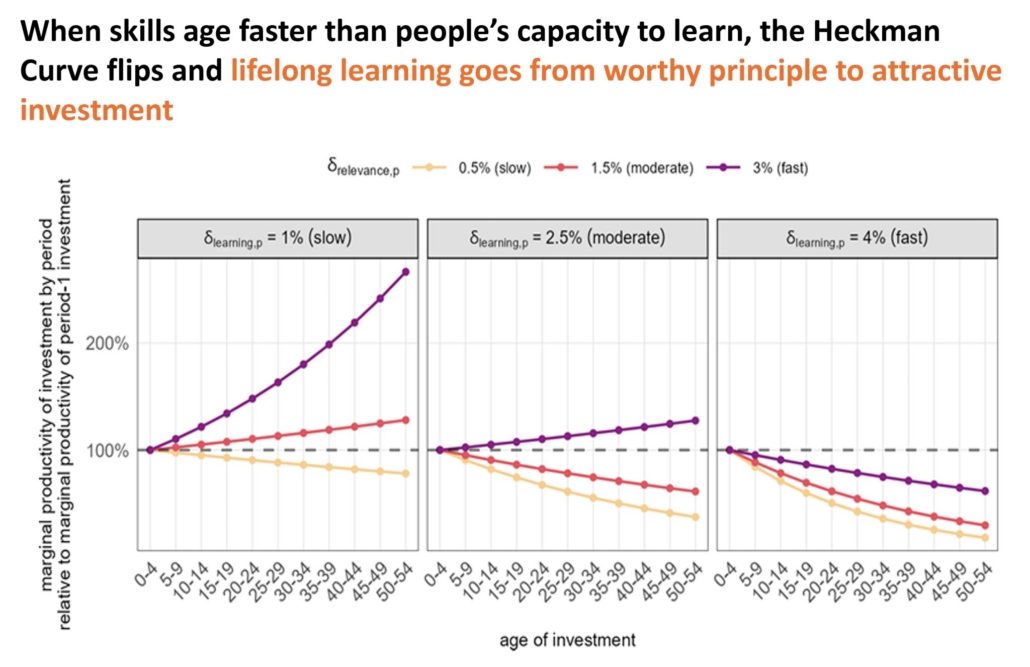
João Souto-Maior and Mitchell Stevens revisit the famous Heckman Curve describing returns human-capital investments across the life course, to show that optimal timing depends on changes in skill relevance due to technological change. They derive trajectories for returns tied to specific skills and suggest how lengthening lifespans will also influence returns on human-capital investments.
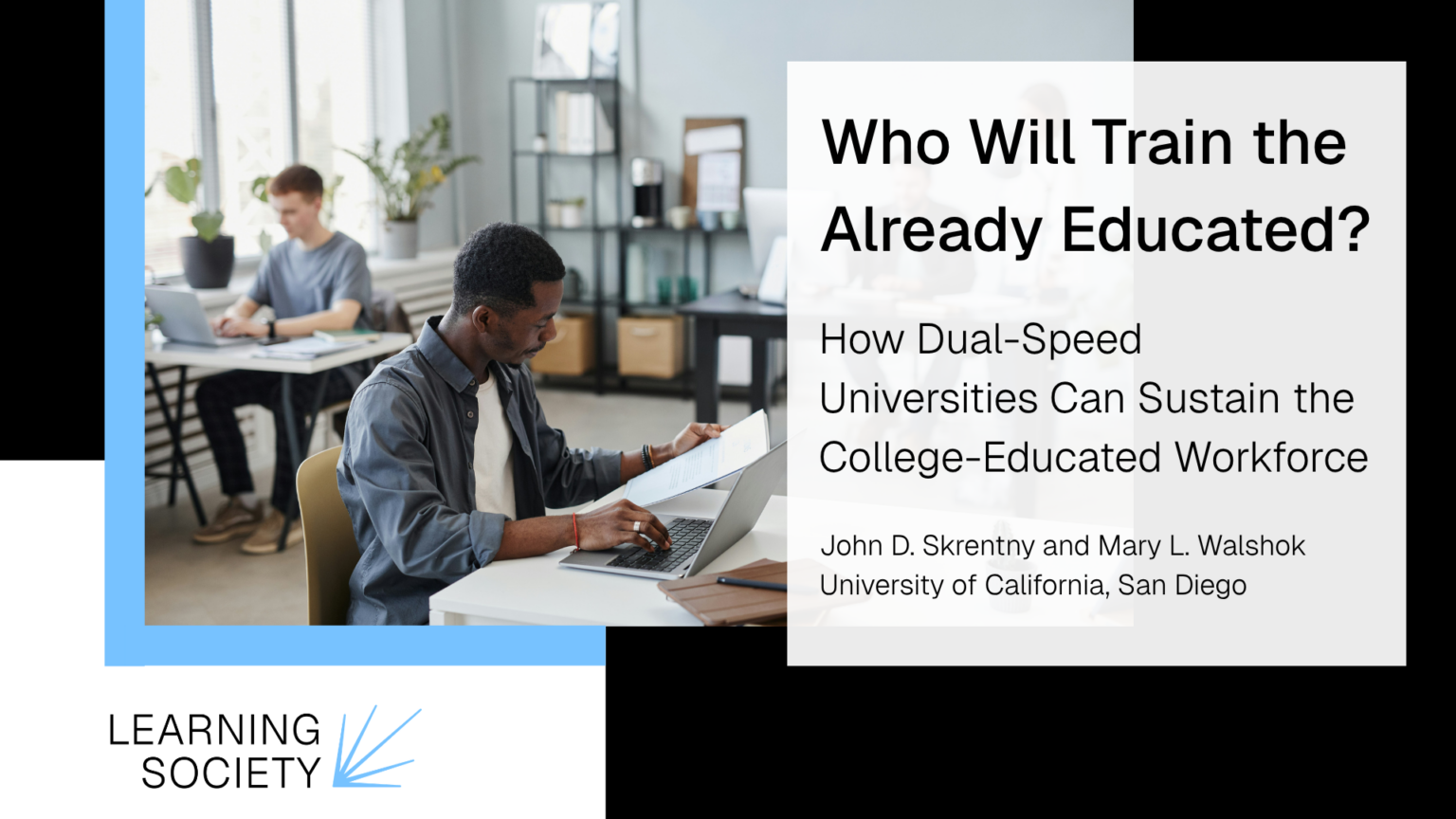
As working lives extend and skills are shifting, UC San Diego’s John Skrentny and Mary Walshok argue the solution to upskilling already lives inside research universities—as extension and continuing education programs they are calling “career sustainers.”
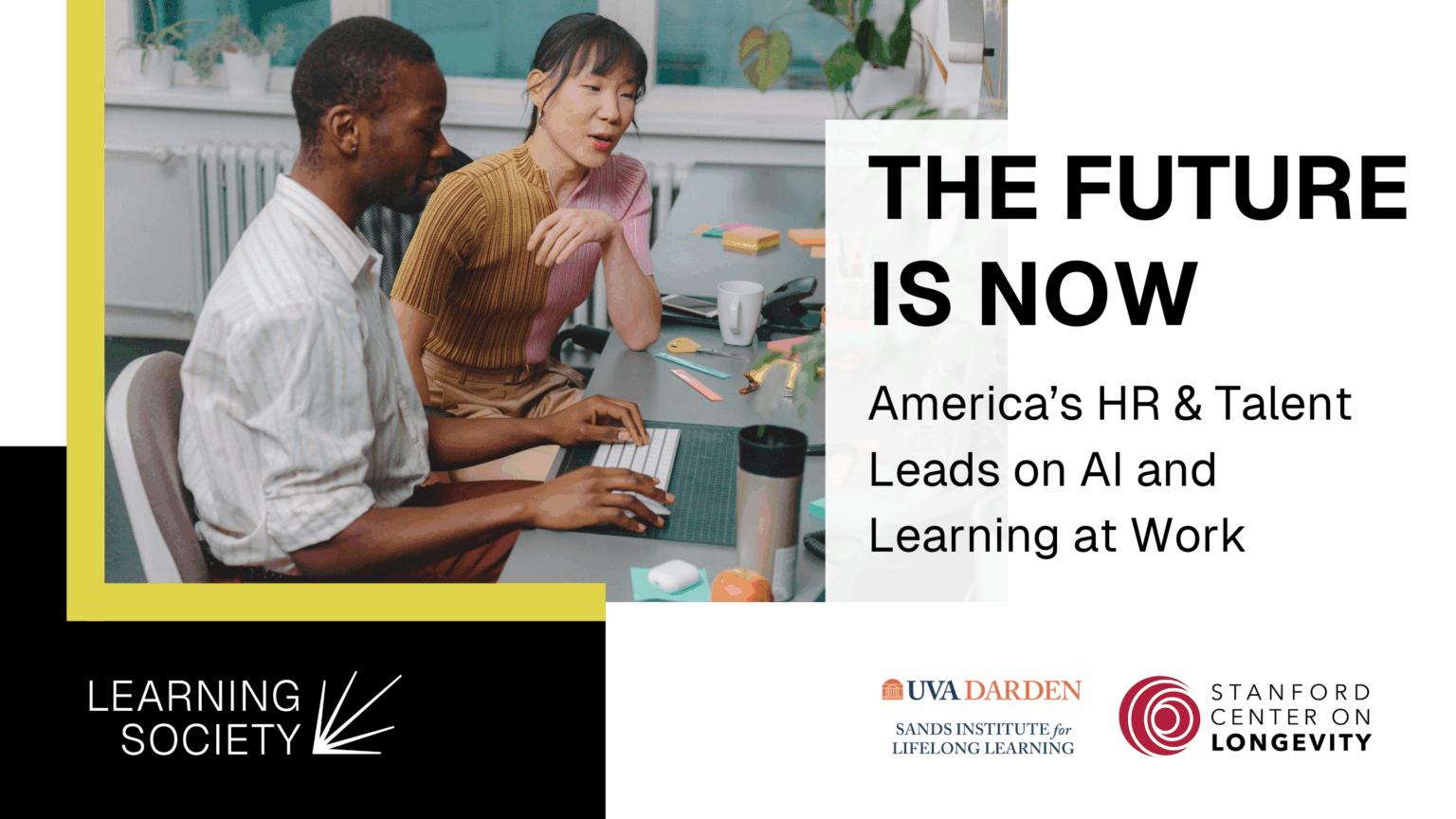
For the last 50 years, employers have increasingly relied on hiring external talent rather than developing workers internally. The explosion of AI and its impact on work is upending this approach — along with traditional assumptions about learning and talent development.
How do Americans flourish as technology advances?
Learning Society’s vision calls for lifelong learning opportunities accessible to all.
People have always been the backbone of the American economy. Yet as technology and machines — unencumbered by pesky mortal frailty and human agency — become more advanced, many are beginning to wonder: what will happen to us? How will people flourish in the next decade and beyond?
the document that launched the Futures Project on Education and Learning for Longer Lives in Fall 2024 — and seeded the core ideas of Learning Society
Antje Gardyan, Gloria Mwase, Matt Sigelman, Anne Trumbore, & Mitchell Stevens