
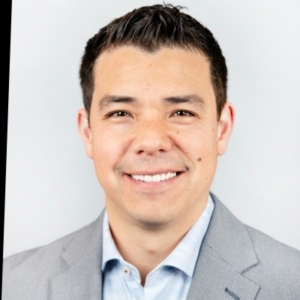
 David Soo is the former vice president of policy and engagement at Jobs for the Future (JFF), where he led key initiatives across JFF and JFFLabs focused on building external engagement and influence, including leadership of the Policy & Advocacy team. Before joining JFF, Soo was senior policy advisor in the U.S. Department of Education’s Office of the Under Secretary and Office of Educational Technology, where he helped architect the Education Department and White House’s higher education innovation agenda during the Obama administration.
Soo’s experience across the policy and philanthropic space gives him a unique vantage point on the future of learning — and why it demands closer collaboration across sectors.
The following Q&A has been lightly edited for clarity:
What does organizing the life course around lifelong learning rather than schooling mean to you and your organization?
We have been talking about lifelong learning for decades, but now it feels urgent and real. I have not gone to “school” to learn for years, but I am learning constantly through reading, research, talking with people, collaborating on hard problems, experimentation, and experience. We need to truly build a system that supports all of these varied ways people develop, giving them more ways to build skills, demonstrate what they know, and have that learning recognized in ways that lead to advancement and opportunity. This will require us building an infrastructure beyond school to support this learning and recognition.
People are living and working into their 70s and 80s — and changing careers far more often than previous generations. How should this reshape how we think about education and training?
If people are going to live longer, work longer, and change careers later in life, education and training have to be designed for people in their 40s, 50s, 60s, and beyond. Some scaled, innovative universities have already shown that learning can be more flexible, affordable, and high quality. But this is not the moment to settle for incremental improvements to the current model. In an age of AI, we should be reimagining learning itself: how people learn, practice, get feedback, demonstrate skills, and connect what they learn to better outcomes throughout their lives. Schools can and should help lead that work, but employers and a new generation of learning providers should also contribute to building models that make learning possible across much longer lives.
What’s one way that schools, employers and policymakers could better collaborate to develop human talent?
The biggest opportunity is to recognize that lifelong learning will not happen at scale if every sector only works on its own piece of the puzzle. Right now, employers train when it serves their immediate competitiveness, schools focus on delivering programs, and policymakers fund slices of the problem through tools like Pell Grants or workforce programs. But the learner or worker experiences all of this as one life, not as separate systems. We need schools, employers, and policymakers to build a more coherent talent system — one that helps people advance without falling through the gaps between institutions.
Beyond graduation rates and test scores that informed policy analysis in the schooled society, what sorts of data and indicators should we develop to measure progress in the learning society?
The holy grail for a long time has been whether we can better understand and measure the soft/durable/ power skills: communication, teamwork, judgment, empathy, adaptability, and problem-solving. In an age of AI, those human capabilities are more important than ever. We need better ways to assess and signal them, and also new ways to help people practice them through creative assignments that combine human judgment, AI feedback, revision, and collaboration. I would love to see indicators of whether people can demonstrate judgment, communicate with empathy, collaborate across differences, revise their thinking, and keep learning in changing environments. Those are much better signs of progress in a learning society than test scores or graduation rates alone.
If you could change one thing about how we invest in people’s talent and potential, what would it be and why?
I would broaden what we are willing to invest in as learning and build the trust infrastructure around it. People are already learning at work, online, in communities, through projects, from peers, and with AI tools, but our funding and credentialing systems still privilege formal programs. If we want a broader learning ecosystem, we need better ways to know what is high quality, verify what people have learned, and make that learning count for hiring, advancement, and further education. With the right trust infrastructure, we could open the door to a much broader learning marketplace: more providers, more kinds of learning, better quality signals, and more ways for people to turn learning into opportunity.
Dialogues is a Q&A series featuring conversations with fellows, partners and experts across workforce development, higher education and philanthropy. Through this series, we aim to give our readers digestible insights into how leaders in these spaces are thinking about the pressing challenges of our times — and how a learning-oriented model of human capital development can come to fruition.

