
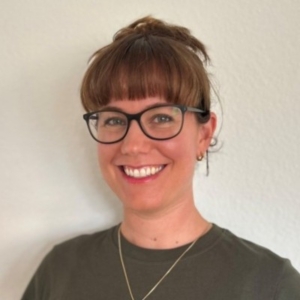
 Katie Caves is a senior researcher and lecturer at ETH Zurich, where she studies global vocational education and training systems to identify models that work, and how they can be adapted to different contexts. Caves’ work is concerned with large-scale systems change, creating more mutually equitable and beneficial learning infrastructure for students, businesses, and economies.
We asked her about the limitations of our current educational models and the importance of building a new collective understanding of how learning is incentivized and rewarded.
The following Q&A has been lightly edited for clarity:
What does organizing the life course around lifelong learning rather than schooling mean to you and your organization?
It means expanding our education system beyond classroom-based learning and skill development. An education system that serves our learning needs must include formal professional pathways that reach the highest levels of education and training. Universities have a lot to offer, but they mainly prepare individuals for about one-third of the jobs on the labor market. The other jobs don’t necessarily have lower skill levels, just different types of skills. Formal vocational and professional pathways at all levels can impart and recognize those skills within the education system, enabling permeability between academic and professional programs.
People are living and working into their 70s and 80s — and changing careers far more often than previous generations. How should this reshape how we think about education and training?
The current education system is largely based on the idea that individuals will learn first and work later. It frames education as something you do all at once in your youth, before entering the workforce and applying your skills. The reality is that everyone already learns most of their skills through work and other informal sources, especially when technological and economic changes mean we will be learning and using different skillsets throughout our lives. An education system that serves this reality must recognize skills learned outside school and enable individuals to phase in and out of formal education to build or adjust their skills.
What’s one way that schools, employers and policymakers could better collaborate to develop human talent?
We can treat work-based learning as real learning. That means shifting employers from consumers to co-producers of skills, which gives them both power and responsibility. Professional programs at the high school level and higher can be guided by state-level occupational curricula that employers help define and deliver. Students should spend at least half of their time in work-based learning, where employers are held accountable to that curriculum. Students earn a training salary and learn the most relevant skills on current tools and technologies from current professionals, and employers benefit from their productivity and a robust talent pipeline. There are a lot of exciting efforts like Indiana’s INCAP pathways to build high-quality professional programs that don’t repeat the mistakes of the past, and work-based learning is the keystone element.
Beyond graduation rates and test scores that informed policy analysis in the schooled society, what sorts of data and indicators should we develop to measure progress in the learning society?
If one purpose of a learning-focused education system is enabling individuals to gain relevant skills, our metrics should reflect that. We need to go beyond graduation to a multidimensional perspective on whether young people are successfully entering the labor market and accessing good jobs. It goes beyond youth, though: in a permeable education system, we should expect to see individuals changing pathways, returning to education or training mid-career, increasing their skill levels, and adjusting their skillsets. We should also look carefully to see whether these skill investments pay off, for whom, and where any adjustments need to be made. The best education systems are dynamic and always adapting to new realities.
If you could change one thing about how we invest in people’s talent and potential, what would it be and why?
I would give us more than one definition of success. Our system right now has one main pathway: high school, then college, then work or graduate school. When there is only one way up, anyone whose skills or aspirations aren’t aligned becomes a failure. We can make room for more kinds of mastery, including academic and professional skills learned in school and workplace environments. The highest skill levels are not reserved for a particular age or type of skill, and the highest levels of education and training should match that.
Dialogues is a Q&A series featuring conversations with fellows, partners and experts across workforce development, higher education and philanthropy. Through this series, we aim to give our readers digestible insights into how leaders in these spaces are thinking about the pressing challenges of our times — and how a learning-oriented model of human capital development can come to fruition.

